In this guide
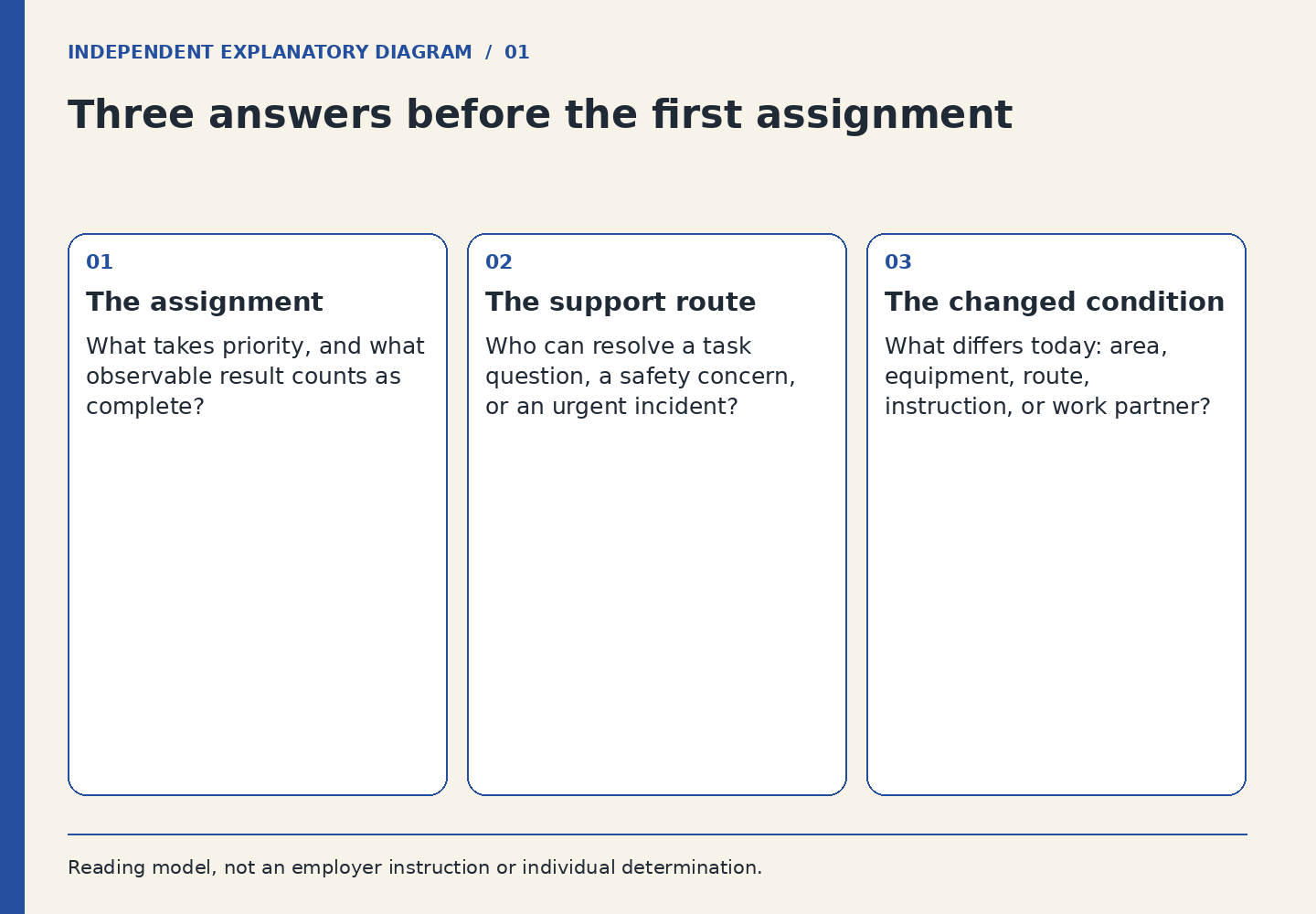
A retail shift can begin with several competing messages: a customer already waiting, merchandise that needs attention, a different assignment, and a coworker leaving. A long personal checklist is not necessarily the answer. The useful beginning is a small orientation to the actual work you are being asked to do today. What is the assignment? Who can resolve a blocked decision? What has changed since the last time you did it?
Nordstrom’s public careers website describes store work in terms of service and teamwork. It does not publish the local operating instructions that make a particular shift workable. This independent article is a general retail planning method for readers interested in Nordstrom work. It is neither an account of working there nor a substitute for a location’s briefing, training, or instructions.
Separate personal preparation from assigned work
Personal preparation might mean knowing your travel route, having the items you have actually been told to bring, and allowing for an unfamiliar entrance. Avoid buying special equipment or clothing merely because an unofficial article suggests it. Ask the responsible workplace contact what is required. The right question is specific: “Which footwear or equipment requirements apply to my assignment?” A general image of retail work cannot answer it.
A workplace briefing, equipment check, or required preparation task belongs within the employer’s actual work and timekeeping arrangements. This article does not suggest performing required work before recording time or after ending a shift. If the expected sequence is unclear, ask how the required preparation and timekeeping should fit together rather than quietly absorbing that uncertainty yourself.
Answer the assignment question in observable terms
“Help on the floor” may be a useful broad direction, but it leaves the next decision open. Ask which area or task takes priority, what completion looks like, and which work should wait if customer needs interrupt it. You do not need a minute-by-minute script. You need enough clarity to recognize when two instructions compete and someone with authority needs to choose.
In a fictional example, a worker is asked to support a department while returned merchandise is accumulating. The useful clarification is whether customer coverage or sorting is the current priority, where items awaiting a decision belong, and who approves exceptions. The clarification does not establish a company policy. It simply prevents the worker from treating every visible task as equally urgent.
Find the support route before you need it
A name alone may not be enough. Know how to reach the person responsible for an ordinary task question, a safety concern, and an urgent incident. These routes may differ. Ask what to do when the usual person is unavailable. Do not assume that a group chat, a personal phone number, or a note left at a workstation is an approved channel for confidential or urgent matters.
OSHA’s education and training guidance emphasizes understandable instruction, reporting routes, and questions about hazards. The practical application here is modest: if you cannot identify the relevant support route, raise that gap during orientation. A contact written somewhere is not necessarily a contact you can reach from the place where the work occurs.
Check one meaningful change
Look for the change that would alter how you do the task: a moved fixture, a different device, a blocked route, a new customer-service instruction, or an unfamiliar work partner. “Anything different today?” can be too broad. “Is the usual stockroom route still the route we should use?” makes the uncertainty visible and easier for the responsible person to answer.
If the assignment itself is new, do not treat familiarity with a similar task as permission to improvise. Ask for the relevant demonstration or instruction. Equally, do not turn orientation into an endless search for every possible problem. Once the necessary assignment, support, and changed-condition questions are answered, follow the approved work method and stay alert for conditions that require another check.
Leave yourself a usable next step
The result should fit into three ordinary sentences: “My first assignment is this. This is the support route if I am blocked. This condition is different today.” Keep any reminder in an approved place and avoid customer details, access credentials, or private coworker information. The goal is a shared understanding that can guide the first real decision, not a parallel record system.
If there is immediate danger, a threat, or an active emergency, skip the planning exercise and use the site’s emergency arrangements and emergency services as appropriate. For ordinary work, a good start is complete when the next safe, authorized action is clear and you know which uncertainty would make you pause again.
Sources and reading boundaries
Sources checked October 7, 2026. This is a review date, not a policy effective date or an account test.
- Nordstrom: public careers website: Public store and supply-chain context, including the stated importance of teamwork and service. Marketing and recruiting material does not establish local duties, operating procedures, training completion, staffing, benefits, or any employee experience. Review basis: Official public page text reviewed.
- OSHA: Education and training: Understandable training, opportunities for questions, worksite demonstrations, and training when tasks or conditions change. Recommended safety-program practices do not prove that any individual is qualified, authorized, or trained. Review basis: Official public page text reviewed.