In this guide
A service conversation works only if the people in it can exchange the information they need. Speaking more loudly, repeating the same words, or addressing a companion may not solve the problem. A better starting point is a respectful question about what would help the customer communicate. The aim is a usable exchange in which the customer remains the decision-maker.
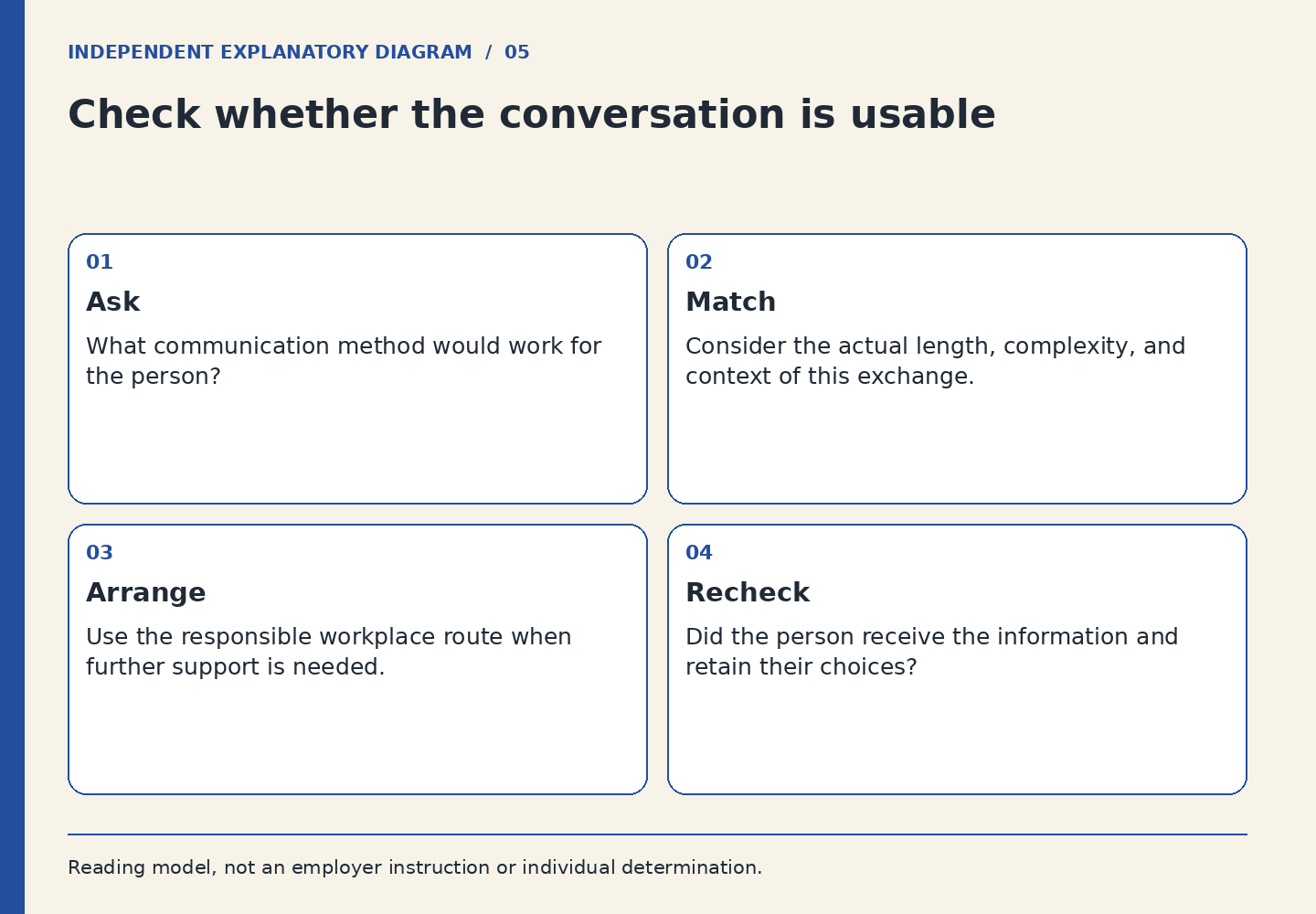
The US Department of Justice explains that effective communication depends on the nature, length, complexity, and context of the exchange and the person’s usual communication methods. This is general accessibility guidance, not a Nordstrom procedure or a legal determination about an individual request. Frontline workers should know the workplace route for arranging appropriate assistance rather than deciding complex legal exceptions themselves.
Ask without requiring a personal history
Try a simple question such as “What would be the best way for us to communicate?” The person may prefer spoken information, written notes, a different format, or another form of support. You do not need to ask for a diagnosis or an explanation of why they use that method. Keep the question tied to the service exchange and the information that must be understood.
Address the customer directly unless they ask for a different arrangement. A companion may be helpful, but their presence does not transfer the customer’s choices to them. Give the person time to respond. Do not finish sentences, assume that silence means agreement, or treat a communication difference as evidence that someone cannot make a purchase decision.
Match the method to this exchange
A brief product question and a long explanation of complicated options are different tasks. A method that works for one may not work for the other. If the exchange becomes more complex, check again rather than assuming that the initial approach remains adequate. The useful question is whether the customer can obtain and convey the actual information, not whether the employee has technically tried one alternative.
In a fictional example, a shopper and employee exchange a short written question about where to find an item. Later, the shopper needs a detailed explanation of several service arrangements. The employee notices that the original exchange has changed and asks what support would work for the longer discussion, then uses the workplace’s assistance route. The example illustrates reassessment, not a universal choice of aid.
Preserve the content, not just the courtesy
An accessible conversation should still contain the meaningful information: what is available, what remains uncertain, who can answer a question, and any relevant choice the customer must make. Reducing the explanation to a reassuring gesture can leave the customer without the same practical understanding another customer would receive. Check whether the message was usable, and invite correction without turning it into a test.
For ordinary spoken explanations, clear language and a manageable pace may help many customers. Avoid jargon when an everyday word will do. If a term has a precise meaning, explain it rather than silently replacing it with something inaccurate. Do not promise outcomes or omit limitations merely to make the conversation shorter.
Know how to arrange further help
Find out which person or service handles communication-support requests at the workplace and how to reach them. The Department of Justice guidance explains that businesses should work with the person whenever possible to identify appropriate support and may not require someone to bring their own interpreter. The details of a particular request require the responsible organization’s process and, when needed, qualified advice.
Do not dismiss a request with “we do not do that” because you personally do not know the arrangement. Equally, do not promise a specific aid, arrival time, or outcome without confirmation. A useful statement names the action you are taking: “I’m contacting the person who can arrange this support.” Keep the customer informed about what is confirmed and what you are still checking.
Handle information and handoffs discreetly
Share only the service-relevant communication need with the authorized colleague. “The customer would like the explanation in this format” is generally more useful than speculation about a disability. Do not create an informal record of someone’s health or communication history. Use approved channels and protect any personal information that the actual service requires.
If the customer moves to another colleague or area, ask whether the communication arrangement should continue and make an appropriate handoff. The customer should not have to repeatedly negotiate the same practical need because the team passed along merchandise but forgot the conversation. Good teamwork carries forward the agreed method while leaving the person in control of their choices.
The outcome is an exchange the customer can use, with any unresolved support request routed responsibly. It is not a claim that one employee has completed an accessibility assessment. Respect, accurate information, and the willingness to find the appropriate help belong together throughout the service.
Sources and reading boundaries
Sources checked October 7, 2026. This is a review date, not a policy effective date or an account test.
- US Department of Justice: ADA requirements for effective communication: Communication support depends on the nature, length, complexity, and context of the exchange and the person’s customary communication methods. General Title II/III guidance. This publication does not decide a particular accommodation, exception, legal obligation, or employee accommodation request. Review basis: Official public page text reviewed.